
Physiotherapy of the temporomandibular joint
About therapy
Dysfunction of the temporomandibular joint and overload of surrounding structures are common, but often neglected, causes of pain not only in the jaw, face or ear, but also in more distant areas, such as the head and spine.

What can we help you with?
Physiotherapy is suitable for problems such as:
- Pain in the temporomandibular joint (e.g. when speaking, chewing or after orthodontic treatment)
- Limited or asymmetrical movement of the lower jaw
- Joint sound phenomena (clicking, popping)
- Pain when chewing, clenching the jaw, bruxism
- Overload and increased tension of the masticatory muscles
- Headaches or migraines with a possible link to temporomandibular joint dysfunction
- Pain in the face, ears, neck and nape
- Tinnitus of functional origin
- Difficulty swallowing without an obvious structural cause
- Conditions after dental or surgical procedures in the oral cavity
How is the examination carried out?
At the beginning of the therapy, the physiotherapist takes a medical history and performs a detailed examination of the temporomandibular joint, soft tissues, cervical spine, posture and any other functional chains. Based on the examination, an individual therapeutic plan is drawn up, which is consulted with the client. The therapy itself then takes place. The therapy also includes client education, self-therapy training and recommendations for preventive measures that help prevent the return of problems. If necessary, physical therapy (e.g. laser) is recommended.
The examination of the temporomandibular joint also includes treatment through the oral cavity, for this reason we ask for thorough hygiene before therapy and smokers to refrain from smoking immediately before therapy.
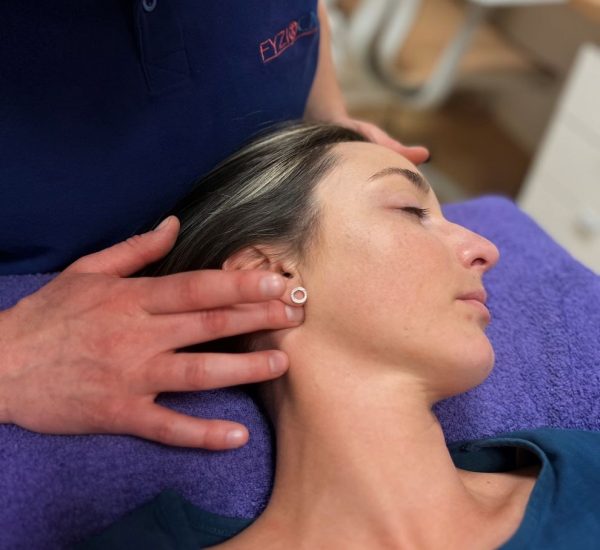
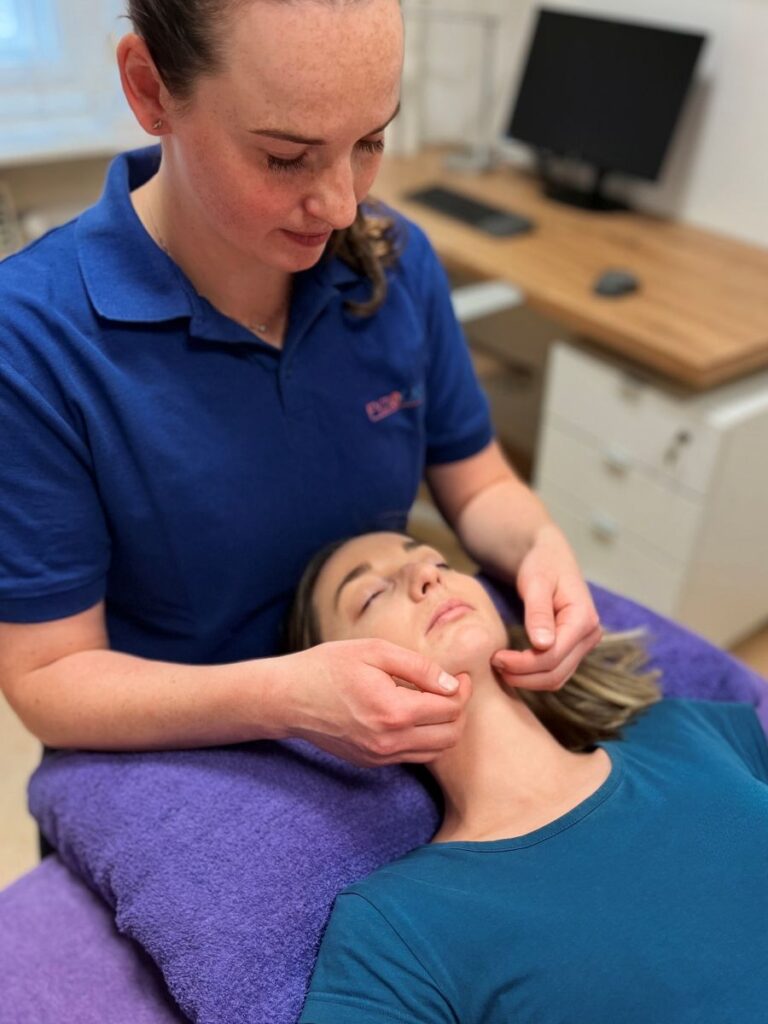
Benefits of physiotherapy:
- Reduction of pain in the area of the temporomandibular joint and adjacent soft tissues
- Improvement of the range and quality of jaw movement
- Influence of muscle imbalance and joint mechanics
- Reduction of soft tissue overload
- Long-term stabilization of the condition and prevention of recurrence of problems
Temporomandibular joint physiotherapy is a suitable addition to dental, orthodontic and ENT treatment and can significantly contribute to improving the quality of life.